Quick Summary:
The fastest way to improve development speed in 2026 is by combining AI-assisted coding, modern frameworks, API-first architecture, and performance-focused workflows. The right web development tools reduce repetitive work, improve code quality, and streamline collaboration. By selecting tools aligned with automation, scalability, and real-time performance, developers can build faster while maintaining reliability and user experience.
Deadlines rarely fail because of a lack of ideas. They slip because workflows become fragmented. Design files don’t translate cleanly into code, testing slows down releases, and small inefficiencies multiply across the build process. That’s exactly why choosing the right web development tools has become less about convenience and more about maintaining momentum.
In 2026, speed is no longer just an advantage. It’s an expectation.
AI-Assisted Development: From Support to Core Workflow
Coding has shifted from manual execution to guided creation. AI-assisted environments now handle repetitive logic, suggest optimized structures, and even predict edge cases.
The real impact lies in how developers spend their time:
- Less effort on boilerplate code
- More focus on architecture and logic
- Faster debugging and iteration cycles
Modern web development tools powered by AI don’t replace expertise; they amplify it. Developers who integrate these systems effectively move from writing code line-by-line to shaping complete systems.
Frameworks That Reduce Decision Fatigue
The era of assembling projects from scratch has largely faded. Integrated frameworks now provide built-in routing, rendering strategies, and performance optimization.
This reduces cognitive load and accelerates setup.
Key advantages include:
- Pre-configured environments for faster starts
- Built-in optimization for performance and SEO
- Clear structure for scalable applications
The most efficient web development tools in this category eliminate unnecessary configuration, allowing developers to focus on building features instead of infrastructure.
Type Safety as a Productivity Multiplier
Error detection has moved earlier in the development cycle. Type-safe environments catch inconsistencies before they reach production, saving time and reducing debugging cycles.
This shift improves:
- Code reliability across large projects
- Collaboration between teams
- Maintainability over time
Instead of slowing development, type systems now enhance speed by preventing costly rework. Among modern web development tools, this capability has become a baseline rather than an optional enhancement.
API-First Architecture for Flexibility
Applications are no longer built for a single platform. Websites, mobile interfaces, and other digital touchpoints all rely on shared data structures.
API-first development supports this shift by:
- Separating content from presentation
- Enabling multi-platform delivery
- Allowing independent scaling of components
Flexible web development tools designed for API integration make it easier to adapt systems without rebuilding them entirely.
Edge Computing for Real-Time Performance
Performance is now tied directly to user expectations. Slow load times impact engagement, conversions, and visibility.
Edge computing addresses this by processing data closer to users.
Benefits include:
- Reduced latency
- Faster content delivery
- Improved responsiveness during peak traffic
Advanced web development tools now integrate edge capabilities, allowing developers to optimize performance at the infrastructure level rather than relying on late-stage fixes.
Version Control and Collaboration Efficiency
Development is rarely a solo effort. Collaboration tools have evolved to support distributed teams working simultaneously on complex projects.
Efficient workflows depend on:
- Clear version tracking
- Seamless merging of code changes
- Real-time collaboration features
The best web development tools in this space reduce friction between contributors, ensuring that progress remains consistent across teams.
Testing and Debugging in Continuous Cycles
Testing is no longer a final step. It’s embedded throughout the development process. Automated testing systems now run continuously, identifying issues as they arise.
This approach enables:
- Faster release cycles
- Higher code quality
- Reduced risk of critical failures
Reliable web development tools for testing allow developers to ship updates confidently without sacrificing stability.
Performance Optimization as a Core Feature
Performance is built into the architecture from the beginning. Modern systems prioritize speed, responsiveness, and efficient resource usage.
Key areas of focus include:
- Optimized asset delivery
- Minimal client-side processing
- Efficient rendering strategies
Instead of reacting to performance issues later, developers now rely on web development tools that enforce optimization from the start.
Security Built Into the Workflow
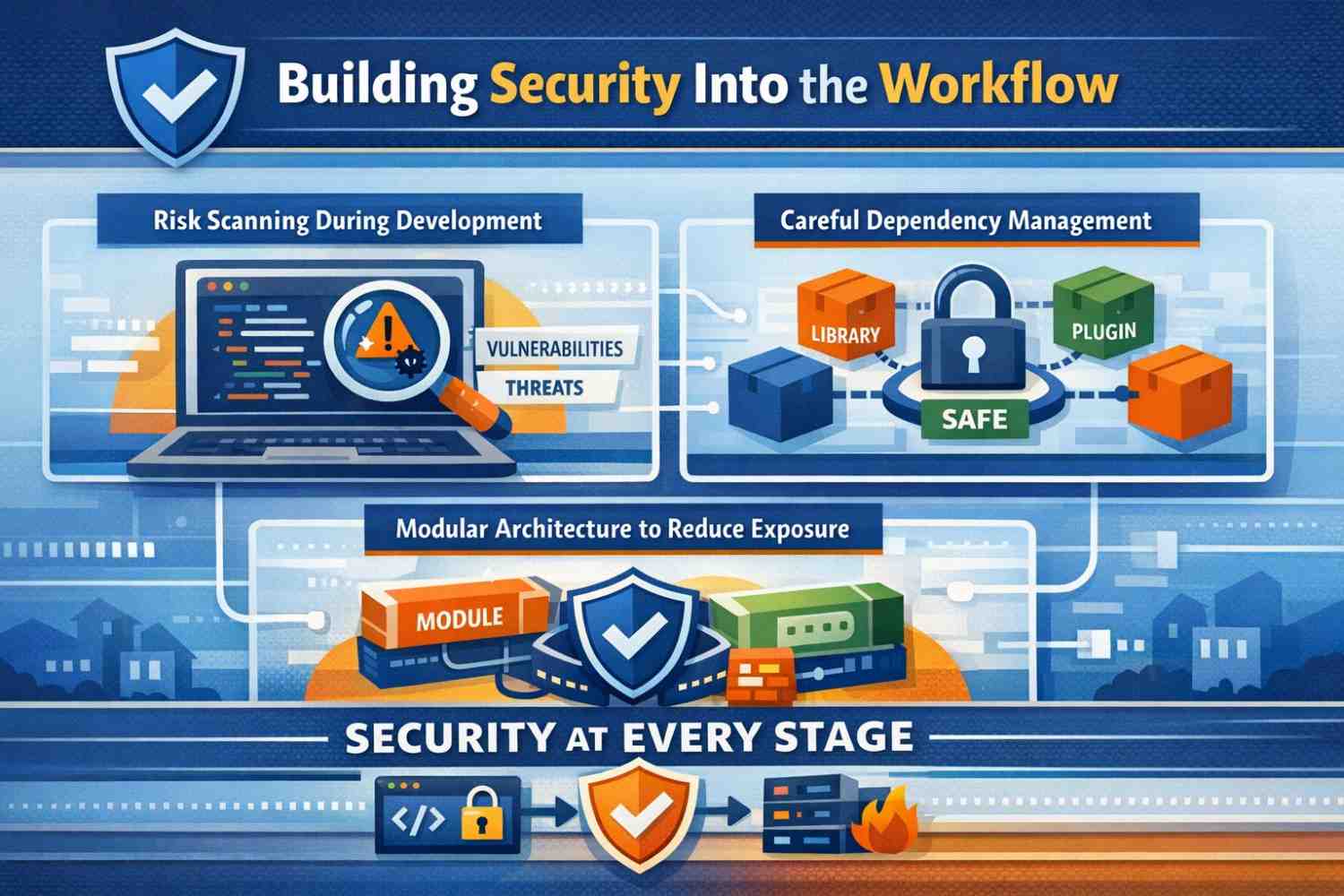
Security concerns have grown alongside application complexity. Vulnerabilities can emerge from dependencies, integrations, or misconfigurations.
Modern workflows address this by:
- Scanning for risks during development
- Managing dependencies carefully
- Reducing exposure through modular architecture
Secure web development tools ensure that protection is integrated into every stage rather than treated as an afterthought.
Accessibility as a Standard, Not an Option
Accessibility has become a fundamental requirement. Applications must function seamlessly for all users, regardless of device or ability.
This involves:
- Clear navigation structures
- Readable content and contrast
- Compatibility with assistive technologies
Forward-thinking web development tools now include accessibility checks as part of the development process, ensuring inclusivity without slowing progress.
Continuous Learning Through Curated Resources
The pace of change makes static knowledge insufficient. Developers rely on curated resources to stay updated with evolving practices.
Valuable resources include:
- Technical blogs and documentation
- Community discussions and forums
- Interactive learning platforms
These resources complement web development tools by helping developers refine their approach and adapt to new technologies.
Where Execution Meets Expertise
Tools alone don’t create efficiency; how they are used defines outcomes. Structured workflows, consistent testing, and strategic integration make the real difference.
Teams that excel in this space combine the right tools with disciplined execution. This is where an experienced website development agency like Knovatek demonstrate their strength, applying modern practices and optimized workflows to deliver scalable, high-performance solutions using advanced web development tools.
Building Faster Without Compromising Quality
Acceleration in development isn’t about rushing. It’s about removing friction. Each tool, framework, and resource should contribute to clarity, speed, and reliability.
When workflows are aligned with modern systems, development becomes more predictable, scalable, and efficient. The result isn’t just faster delivery; it’s better digital experiences built with confidence and precision.